PDRN intradermal therapy for atrophic acne scars
47% mean reduction in scar volume (ECCA grading) after 4 monthly sessions vs. 11% saline control.
Salmon-derived polydeoxyribonucleotide. The adenosine A2A pathway, weaponized.
PDRN is a low-molecular-weight DNA fragment library extracted from the gonadal tissue of Oncorhynchus keta (Pacific salmon). Sequence-purified and γ-irradiated to ≥95% purity, it acts as a salvage substrate for the purinergic system — engaging A2A adenosine receptors on fibroblasts, endothelial cells, and osteoblasts to drive VEGF, FGF-2, and TGF-β1 transcription without an inflammatory cascade.

Free nucleotides liberated from PDRN bind A2A adenosine receptors on dermal fibroblasts, raising intracellular cAMP and triggering ERK 1/2 phosphorylation.
Released purines and pyrimidines re-enter the de novo nucleotide pool, sparing cells the ATP cost of building new DNA — critical in hypoxic or post-procedure tissue.
A2A activation upregulates VEGF, FGF-2, TGF-β1 and collagen Type I/III mRNA within 24 – 72 hours, accelerating granulation tissue and re-epithelialization.
The same A2A axis suppresses TNF-α and IL-6, so repair proceeds without scar-forming inflammation. This is why PDRN is favored post-laser and on atrophic scars.
Supports regenerative signaling and the skin's recovery environment via the A2A adenosine pathway.
Cellular reversal, DNA repair, or stem-cell activation.
EmergingScientifically promising · rapidly growing
47% mean reduction in scar volume (ECCA grading) after 4 monthly sessions vs. 11% saline control.
Meta-review confirmed A2A-mediated wound-healing acceleration of 28 – 35% across 12 RCTs spanning diabetic ulcer, burn, and post-surgical models.
Significant improvement in crow's-feet wrinkle score (Lemperle 4.2 → 2.6) and dermal echogenicity at 12 weeks.
PDRN-treated hemifaces showed 38% faster erythema resolution and 22% lower PIH incidence vs. vehicle.
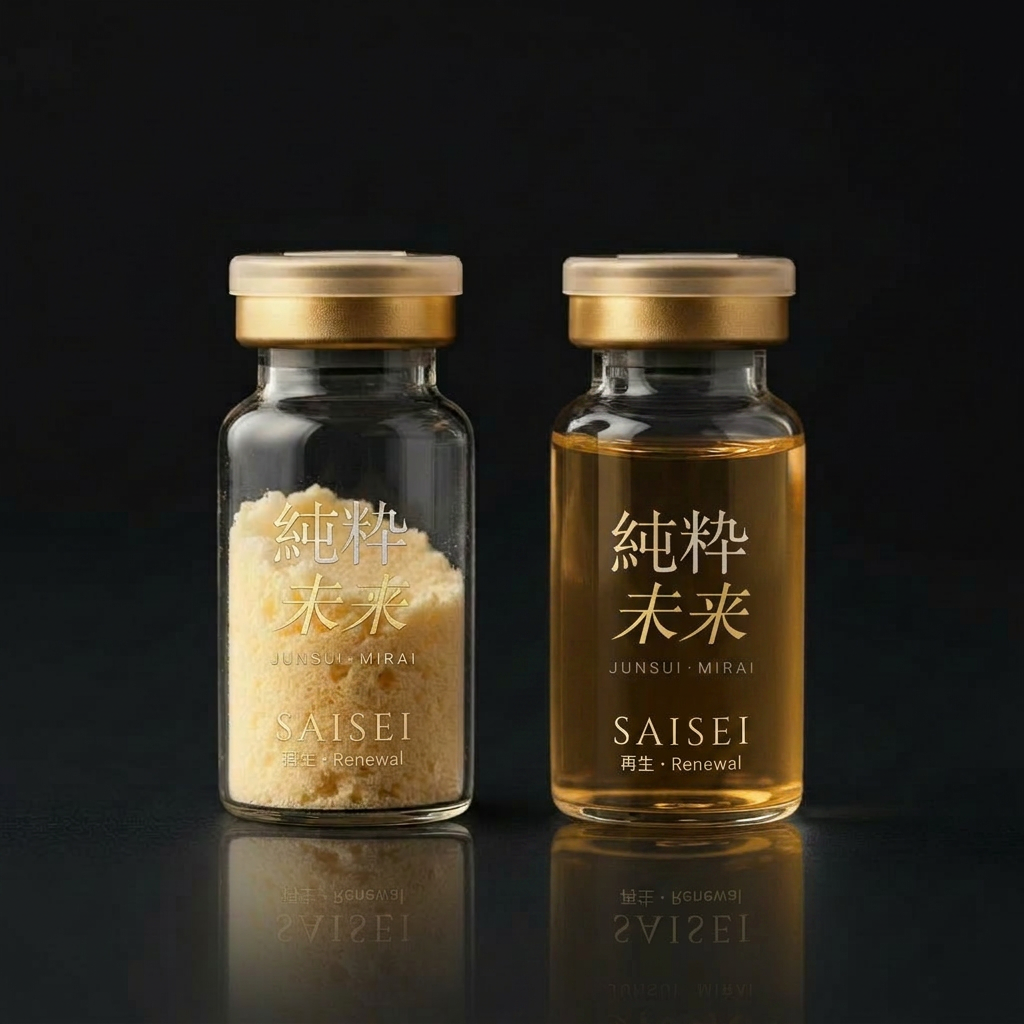
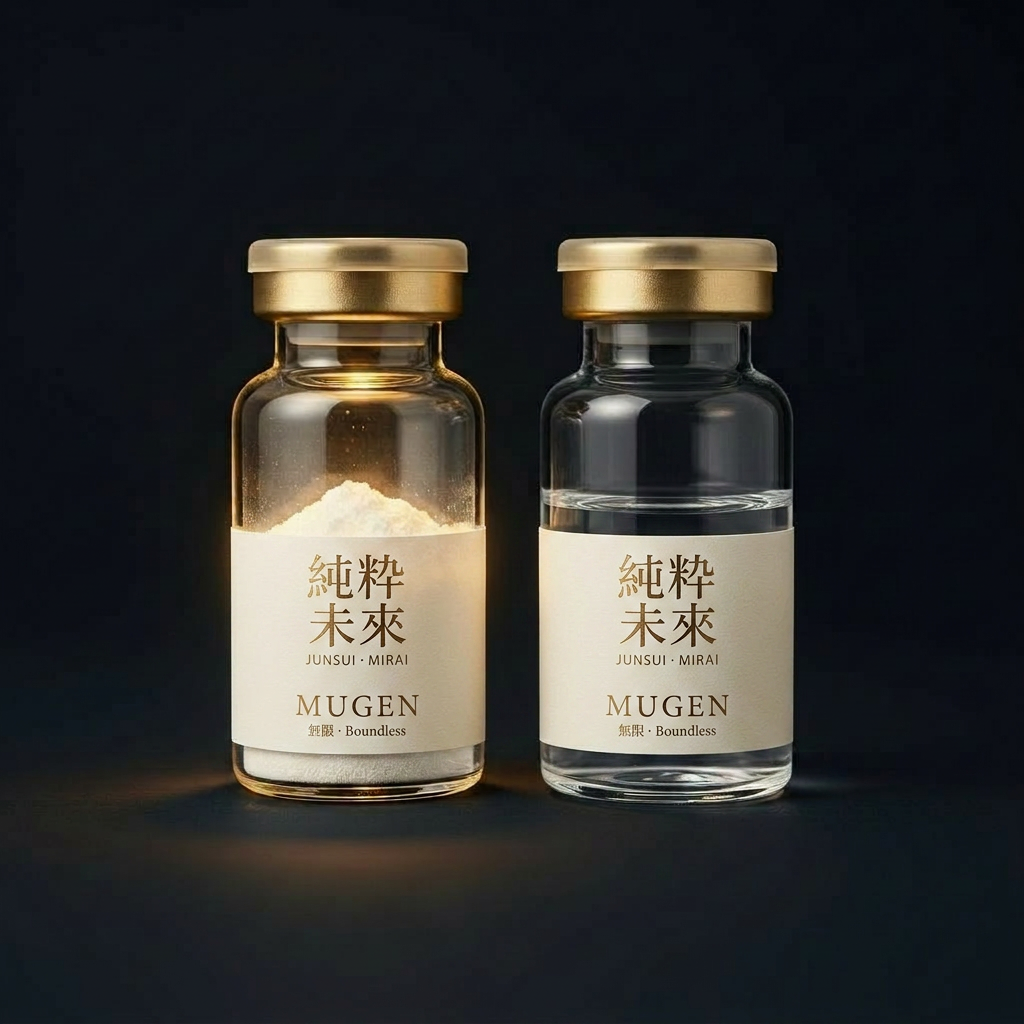
PDRN is the active molecule; Rejuran is one branded PDRN device. Junsui Mirai's Saisei delivers 2.0 mg/ml — comparable polynucleotide load at higher per-box volume.
Salmon DNA has the closest base-pair homology to human DNA among commercially viable sources, minimizing immunogenicity while supplying the right nucleotide ratios for human salvage pathways.
PDRN's molecular weight is too large for passive transdermal absorption. Topical use functions as a post-care glide; scientific effect requires intradermal deposit via tri-pin cap.