
← The Science
Vitamin B3 amide · NAD⁺ Precursor

Niacinamideナイアシンアミド

FoundationalDecades of evidence

The barrier and pigment modulator. A NAD⁺ precursor with 50 years of scientific data.

Niacinamide (nicotinamide) is the amide form of vitamin B3 and the direct biosynthetic precursor of NAD⁺ and NADP⁺ — the central redox cofactors of cellular metabolism. At 2 – 5% topical concentration it upregulates ceramide and free fatty acid synthesis, blocks melanosome transfer from melanocytes to keratinocytes, and dampens inflammatory cytokine release.

Mechanism of Action

From topical application to expression.

01 · NAD⁺ pool refill

Niacinamide enters the salvage pathway, restoring NAD⁺ levels in mitochondria and powering sirtuin-mediated DNA repair.

02 · Barrier lipid synthesis

Upregulates ceramide, cholesterol, and free fatty acid synthesis in stratum corneum by 30 – 65%, restoring barrier integrity.

03 · Melanosome transfer block

Inhibits the keratinocyte PAR-2 receptor that captures pigment from melanocytes, reducing surface pigment by 35 – 68% in 8 – 12 weeks.

04 · Anti-inflammatory

Suppresses NF-κB-mediated cytokine release, reducing redness, papule count, and post-procedure flushing.

Evidence Honesty

How we talk about Niacinamide.

What it actually does

Supports the barrier, modulates pigment transfer, and refills the NAD⁺ pool — fifty years of scientific data behind it.

What we won't claim

Magic, miracles, or anything the dermatology literature does not already quietly confirm.

FoundationalDecades of evidence

Molecular Profile

The molecule.

Chemical name
Pyridine-3-carboxamide (nicotinamide)
Molecular weight
122.12 Da
Solubility
Freely water-soluble (500 mg/ml)
Stable pH range
5.0 – 7.5
Concentration
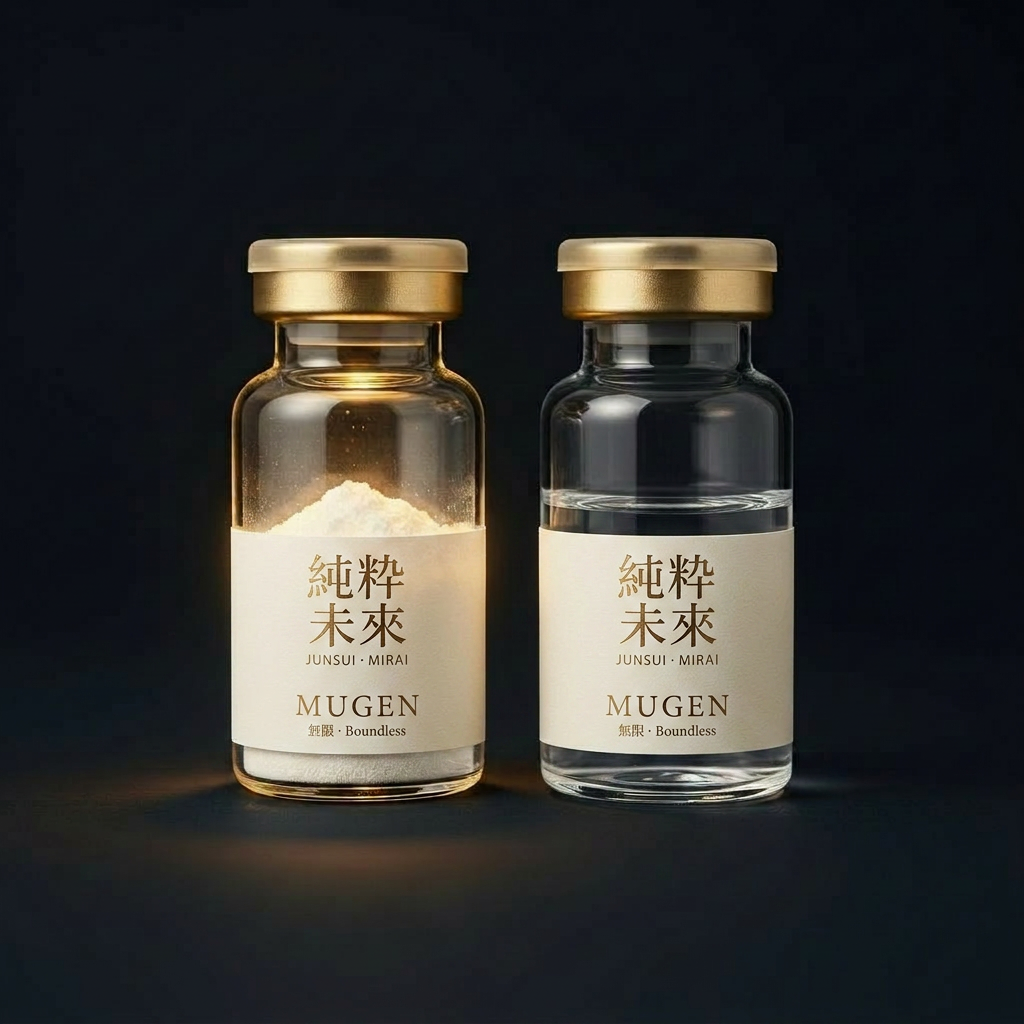
Junsui Mirai (Mugen) — 2.0%
Mechanism

How we dose it.

Onset
Barrier improvements at 2 weeks; pigment at 8 weeks
Pairs with
HA, PDRN, GHK-Cu, retinoids (no interaction)
Avoid
Pure ascorbic acid mix at low pH (forms niacin → flush)
Pooled Scientific Endpoints

The numbers.

Hyperpigment area
−35 to −68%
8 – 12 weeks
Stratum corneum ceramides
+65%
2 weeks
Trans-epidermal water loss
−24%
4 weeks
Sebum production
−20%
6 weeks
Peer-Reviewed Evidence

3 cited studies.

British Journal of Dermatology · 2002
10.1046/j.1365-2133.2002.04834.x

The effect of niacinamide on reducing cutaneous pigmentation and suppression of melanosome transfer

Hakozaki T. et al.

5% niacinamide reduced hyperpigmentation and skin yellowness; mechanism confirmed as melanosome transfer inhibition (35 – 68%).

Cohort · n = 18 in vivo + cell culture
Dermatologic Surgery · 2005
10.1111/j.1524-4725.2005.31732

Niacinamide: A B vitamin that improves aging facial skin appearance

Bissett D.L. et al.

5% niacinamide significantly reduced hyperpigmented spots, red blotchiness, wrinkles, and sallowness over 12 weeks.

Cohort · n = 50, double-blind, split-face
British Journal of Dermatology · 2000
10.1046/j.1365-2133.2000.03617.x

Nicotinamide increases biosynthesis of ceramides as well as other stratum corneum lipids

Tanno O. et al.

2% nicotinamide increased ceramide synthesis by 65%, cholesterol by 32%, and free fatty acids by 56% in human keratinocytes.

Cohort · Cultured human keratinocytes
Safety

What we won't hide.

  • 01Excellent topical safety; rare niacin-flush only if degraded to nicotinic acid
  • 02Pregnancy and lactation: considered safe at cosmetic concentrations
  • 03Stable in opaque packaging; minor yellowing with light exposure
Practitioner Questions

FAQ.

Niacinamide or vitamin C for pigment?+

They work on different stages. Vitamin C blocks melanin synthesis; niacinamide blocks the transfer of finished melanin to keratinocytes. They are complementary, not competing.

Can it cause a flush?+

Niacinamide itself does not flush. Flushing comes from nicotinic acid (niacin), a degradation product if niacinamide is hydrolyzed at low pH. Junsui Mirai buffers Mugen at pH 6.8 to prevent this.